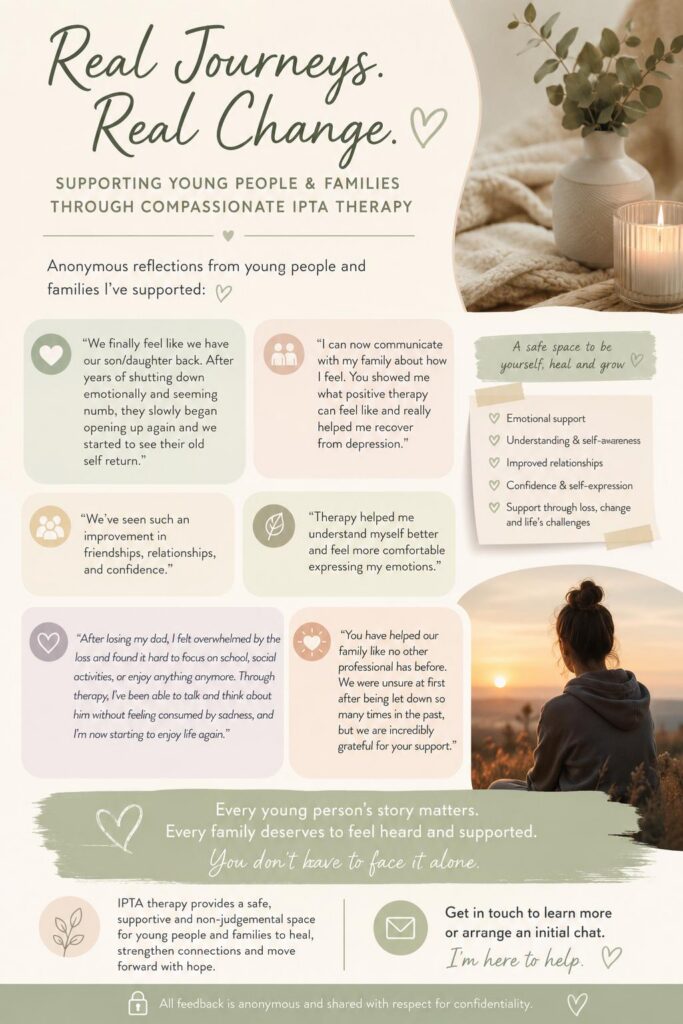

By April Hill, Therapist at Laura Greenwood Therapy
Adolescence can be an incredibly challenging stage of life. As teenagers navigate changing friendships, family dynamics, school pressures, identity, and growing independence, it’s not uncommon for emotional difficulties to emerge. For some young people, these challenges can contribute to feelings of low mood, isolation, overwhelm, or depression.
At Laura Greenwood Therapy, we understand that mental health struggles rarely happen in isolation. Relationships, communication, and connection play a huge role in how young people feel about themselves and the world around them. That is where IPT-A (Interpersonal Psychotherapy for Adolescents with Depression) can offer valuable support.
What is IPT-A?
IPT-A is a specialist, evidence-based therapy designed specifically for teenagers experiencing low mood or depression. Rather than focusing purely on thoughts and behaviours, IPT-A explores the connection between emotional wellbeing and relationships.
The therapy helps young people understand how their interactions with others can impact their mood, and equally, how feeling low can affect their relationships. The aim is not to “fix” the young person, but to support them in making sense of their experiences, improving communication, strengthening relationships, and building emotional resilience.
When Depression Looks Like Anxiety, Anger, or Emotional Dysregulation
Depression in teenagers does not always look the way people expect it to.
Many young people experiencing depression may not describe themselves as “depressed” at all. Instead, what parents, carers, or teachers often notice first is anxiety, constant worry, irritability, anger, withdrawal, or emotional outbursts.
Some teenagers may appear highly anxious, overthinking, struggling socially, avoiding school, feeling overwhelmed, or constantly worrying about relationships and friendships. Others may become emotionally dysregulated, reactive, or frustrated, particularly when they are carrying difficult emotions underneath that they do not yet have the words for.
Depression can sometimes become a “hidden illness” in adolescence.
This is particularly common in young people navigating grief, conflict within relationships, friendship difficulties, bullying, family separation, or major life transitions. Sometimes sadness is expressed outwardly through anger or behavioural changes rather than tears or low mood. This can often be misunderstood, especially in boys, though girls can experience this too.
At Laura Greenwood Therapy, we understand that underneath anxiety, anger, or emotional dysregulation there is often a young person struggling to feel safe, connected, understood, or emotionally supported.
IPT-A can be especially helpful because it gently explores what may be happening underneath these emotional responses. By understanding the links between relationships, communication, emotional experiences, anxiety, and mood, young people can begin to feel more understood, supported, and able to manage their emotions in healthier ways.
Why Relationships Matter
As humans, we are deeply relational. During adolescence, relationships become even more significant as young people begin to develop their identity and independence outside of their family unit.
Sometimes depression or emotional distress can be linked to:
- Ongoing conflict with parents, siblings, friends, or peers
- Friendship breakdowns or feeling excluded
- Big life changes such as changing schools or family separation
- Grief and loss
- Feeling lonely or disconnected from others
- Struggles forming or maintaining close relationships
- Anxiety around friendships, school, or family dynamics
- Emotional overwhelm and difficulty regulating feelings
IPT-A recognises that these experiences can have a powerful impact on emotional wellbeing. The therapy provides space to explore these difficulties safely and compassionately.
How Does IPT-A Work?
IPT-A is typically offered over 12–16 weekly sessions, with additional sessions involving parents or carers where appropriate. Sessions usually last around 50 minutes.
At the beginning of therapy, the therapist works collaboratively with the young person to understand:
- What they are struggling with emotionally
- Which relationships feel most important and/or difficult
- How their mood and relationships may be influencing one another
- What goals they would like to work towards in therapy
The therapy is supportive, collaborative, and paced around the young person. Teenagers are never expected to share more than they feel comfortable with, especially in the early stages of building trust.
Over time, the therapist supports the young person to:
- Improve communication skills
- Express emotions more openly
- Navigate conflict more effectively
- Strengthen supportive relationships
- Rebuild confidence and connection
- Understand triggers for anxiety or emotional overwhelm
- Develop healthier coping strategies
Importantly, IPT-A also helps young people recognise that they do not have to manage everything alone.
How is IPT-A Different from CBT?
Many people have heard of CBT (Cognitive Behavioural Therapy), but may not know how IPT-A differs.
CBT focuses primarily on the relationship between thoughts, feelings, and behaviours, often using practical strategies to challenge unhelpful thinking patterns.
IPT-A, however, focuses more closely on relationships and emotional connection. It explores what is happening between the young person and the important people in their life, and how improving these relationships can support recovery from depression, anxiety, or low mood.
Both approaches can be highly effective, and both are evidence based, NICE recommended first line treatments for treating depression, and the most suitable therapy will depend on the individual young person and their needs.
Creating a Safe and Supportive Space
Starting therapy can feel daunting for teenagers. Opening up to someone new can bring understandable worries about being judged, misunderstood, or overwhelmed.
A key part of IPT-A is creating a calm, respectful, and non-judgemental therapeutic relationship where the young person feels genuinely listened to and understood.
At Laura Greenwood Therapy, we recognise the courage it takes for young people to seek support. Therapy is not about having all the answers or “getting it right.” It is about creating space for curiosity, understanding, and connection.
Supporting Recovery Together
IPT-A also recognises the importance of support networks. Therapists may help young people identify their own “recovery team” — trusted people who can provide encouragement, safety, and support throughout their journey.
For some young people, IPT-A may also be used alongside medication if symptoms are more severe or long-standing. This is always discussed carefully with the young person and their parents or carers to ensure the most appropriate support is in place.
Final Thoughts
Teenagers today face enormous pressures, and when relationships feel difficult or overwhelming, emotional struggles can quickly intensify. Anxiety, anger, emotional dysregulation, withdrawal, and low mood are often signs that a young person may need support rather than judgement.
IPT-A offers young people a compassionate and evidence-based way to understand themselves, strengthen their relationships, and move towards feeling more connected, emotionally regulated, and hopeful again.
At Laura Greenwood Therapy, we are passionate about providing young people with safe, supportive spaces where they feel heard, valued, and understood.
If you would like to find out more about IPT-A or explore whether it may be helpful for a young person in your life, please feel free to get in touch with our team.
Warm wishes,
April Hill
Therapist at Laura Greenwood Therapy