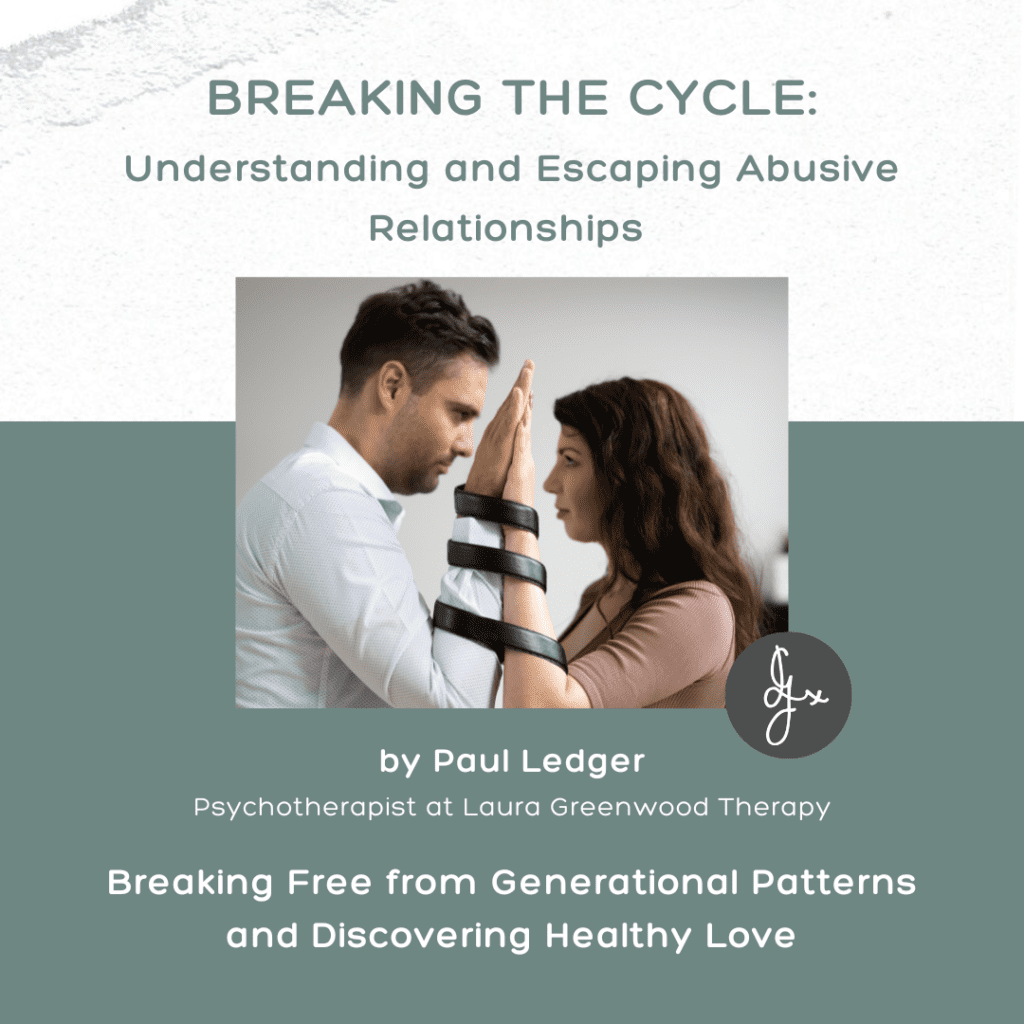
Breaking Free from Generational Patterns and Discovering Healthy Love
Blog by Paul Ledger, Psychotherapist at Laura Greenwood Therapy. Edited by Laura Greenwood, a fierce advocate for breaking generational patterns that keep people stuck from living their most beautiful lives. Here is one for the people who all deserve to experience true, pure love.
Being in a difficult or abusive relationship can leave you feeling confused, isolated, and powerless. Many women I work with struggle to make sense of their experiences, wondering if it’s really as bad as it seems. Or if it’s even their fault.
Understanding the patterns of abusive behaviour can be the first step toward reclaiming control, rebuilding confidence, and finding freedom.
Signs of an Abusive Relationship
Abuse doesn’t always look like physical violence. It can be subtle, emotional, and manipulative, often starting small and escalating over time. Some common patterns include:
- Isolation from friends and family
A partner may discourage you from seeing the people who care about you, claiming they don’t have your best interests at heart. They may argue with you about visits or make themselves unpleasant around others, gradually cutting you off from support. Over time, you may feel it’s easier not to see anyone at all.
- Love bombing and control
Early in the relationship, some partners may shower you with attention, gifts, and declarations of love. They may pressure you to make big commitments quickly. Moving in together, buying a pet, or even talking about marriage and children. Then, as the affection fades, criticism and control take its place, leaving you questioning your own worth and judgment.
- Persuasion and manipulation
Abusive partners often use guilt, fear, and threats to keep you bound to them. Common tactics include:
- “I can’t cope without you.”
- Threatening self-harm if you leave.
- Spreading lies about you to friends or family.
- Threatening to share private information or photos.
These tactics are designed to make you feel responsible for their well-being, trapped, and powerless.
- Gradual erosion of confidence
Abuse often starts small: a “joke” at your expense or mild criticism. Over time, it escalates into demands, instructions, and controlling behaviour. Gaslighting, denying reality, minimising your feelings, or undermining your confidence is common.
You may feel “it’s me” because others don’t see the abuse, especially if your partner is charming and helpful to everyone else.
- Covert and subtle control
Some controlling behaviours are less obvious:
- “You’re no good with money, I’ll handle it.”
- “If you have nothing to hide, let me check your phone or emails.”
These actions slowly erode your independence and self-belief, making it harder to leave.
Understanding the Patterns Helps You Break Them
Recognising these behaviours is vital. Often, people remain in abusive relationships because they’ve been convinced they can’t cope without their partner, or because the abuse has become normalised over time. Awareness is the first step toward reclaiming your life.
Tips for Breaking Free or Avoiding Abusive Patterns
- Reconnect with supportive people whom you can trust – Friends, family, and community can provide perspective and encouragement.
- Document abusive behaviour – Keeping a record can help you see the patterns clearly and can be useful if legal or safety steps are needed.
- Set clear boundaries – Even small boundaries, like limiting access to your phone or refusing to tolerate criticism, are a start.
- Seek professional support – Therapists, support groups, and domestic abuse services can guide you safely through decision-making.
- Develop an exit plan – Safety is paramount. Research options, financial independence, and safe places to go.
- Trust yourself – Doubt is a tool abusers use. Remember: feeling trapped or guilty does not mean you are at fault.
There Is Hope
Change is possible. With support, self-awareness, and courage, many women break the cycle of abusive relationships and go on to build lives full of respect, autonomy, and love. Healing takes time, but every small step is a victory.
Final Words from Laura G
The topic of abuse is one that I believe runs in more households and friendship groups than any of us would believe possible…because I believe we have all been modelled unhealthy ways. I also believe so many of us desperately seek love…yes, including those exhibiting abusive behaviours. We all need help and support to recognise what healthy love looks like and how to both provide and receive that.
Both are challenging for those who have experienced conditional love throughout their whole life, and crave something we all do deep down, and wonder, is the sort of love I crave truly possible? Well, I know it is. But I know breaking these patterns takes time. For all. It does not happen overnight, and believe me, Paul and I know, this blog will not break the pattern itself…but it is about going some way to helping you step outside of being locked in the experience…to recognise, I am deeply unhappy, and I deserve to be happy. To consider how you can safely exit something that is contributing to your unhappiness.
Every beautiful life built begins with one next right step in the right direction. We, at Laura Greenwood Therapy, hope that we in some way contribute to that life.
If abuse is part of your story now, or previously, you are not alone. Know, you do not need to go through this alone, too.
Laura & Paul x